
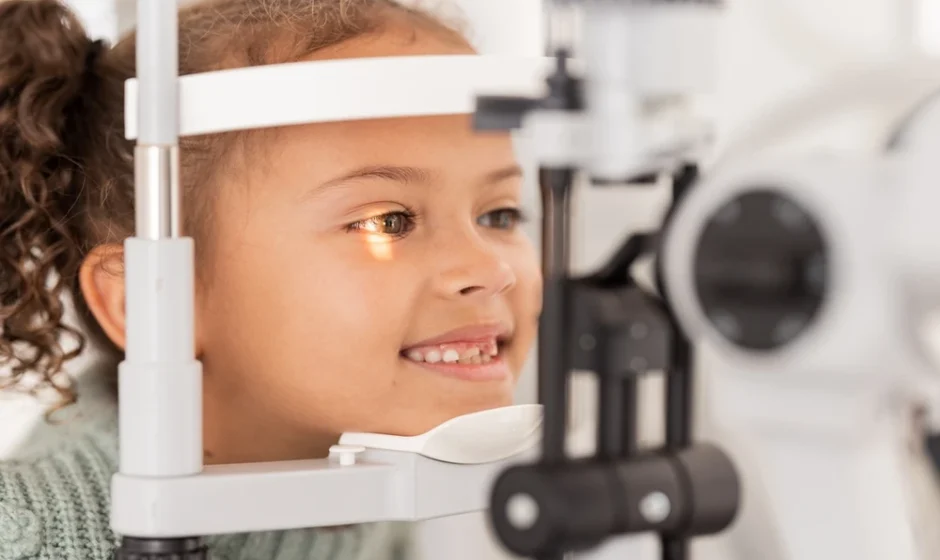

You might be noticing little things that are easy to explain away at first. Your child loses their place while reading, avoids homework, complains of headaches, or seems restless in class. Maybe a teacher has mentioned trouble focusing, and now you are left wondering whether this is a learning issue, a behavior issue, or something else entirely. In some cases, a visit to an Ophthalmologist in McLean may help rule out vision-related concerns. That uncertainty can feel heavy, especially when you want to help and do not want to miss something important.
In many cases, vision plays a bigger role than families realize. When a child cannot see clearly or use their eyes together well, school can become frustrating, tiring, and discouraging. The short version is simple. Pediatric eye exams for learning and development can catch problems early, support reading and attention, and give children a better chance to feel confident in the classroom and beyond.
Why can children struggle in school when the real issue is their vision?
It is easy to assume a child who avoids reading is not interested, or that a child who fidgets during close work simply lacks focus. But what if reading feels blurry, words seem to move, or the eyes are working too hard to stay on the page? A child may not have the words to explain that. They may only know that school feels harder than it should.
This is where children’s eye exams matter. Good vision is not just about seeing the board across the room. It also includes tracking, focusing, depth perception, and eye teaming. These skills affect how a child reads, writes, copies from the board, and handles screen time or homework. When one of those skills is off, the result can look a lot like poor attention or weak academic performance.
Because of this, families sometimes spend months trying tutoring, behavior charts, or more practice at home while the root issue remains untreated. That can wear everyone down. A child may start to feel behind. Parents may feel guilty. Teachers may feel concerned. The longer it goes on, the more confidence can slip.
According to vision screening guidance from MedlinePlus, screenings can help find possible problems, but they are not the same as a full eye exam. That difference matters. A school screening may catch reduced distance vision, but it may not identify all the visual issues that affect reading and close work.
What makes early vision care so important for learning and development?
Children learn by watching, tracking, copying, and reading. If those basic visual tasks are hard, learning can become a daily strain. A child who sees clearly and comfortably can spend more energy on understanding the lesson. A child with an undetected vision problem may spend that same energy just trying to get through the page.
So, where does that leave you? It means early care can change the path before frustration becomes a pattern. Kids eye exam importance for school success is not just a catchy phrase. It reflects a simple truth. When vision problems are found and treated early, children often have an easier time engaging in class, building literacy skills, and feeling more secure in their abilities.
There is also the developmental side. Vision supports hand eye coordination, sports, spatial awareness, and even social confidence. A child who struggles to catch a ball, avoid bumping into things, or make eye contact during activities may be dealing with more than clumsiness or shyness. Clear, comfortable vision supports growth in ways that reach far beyond grades.
School screenings can help, and the American Academy of Pediatrics notes the value of health screenings at school, but they are one piece of the picture. If you have concerns, an eye doctor can look deeper and give you more complete answers.
How do screenings compare with a full exam from an eye doctor?
Many parents feel relieved when a child passes a school screening, and that reaction makes sense. But passing a screening does not always mean everything is working as it should. A screening is designed to flag some problems quickly. A full exam is meant to evaluate the whole visual system.
| Type of Check | What It Often Covers | What It May Miss | Best Use |
|---|---|---|---|
| School Vision Screening | Basic distance vision concerns | Eye teaming, tracking, focusing, depth perception, some eye health issues | Early alert for possible problems |
| Full Pediatric Eye Exam | Visual acuity, eye alignment, focusing, tracking, eye health, prescription needs | Less likely to miss learning related vision concerns | Clear diagnosis and treatment plan |
If your child says words blur together, skips lines while reading, sits too close to screens, or gets tired during homework, a full exam is often the more helpful next step. That is especially true if school performance has changed or if there is a family history of vision problems.
What can you do right now if you suspect a vision problem?
1. Watch for patterns, not isolated moments.
One rough homework night may mean very little. A repeated pattern is different. Notice headaches, eye rubbing, short attention during reading, covering one eye, losing place on the page, or avoiding close work. Write down what you see and when it happens. Those details can help an eye doctor connect the dots.
2. Ask school based questions.
Talk with your child’s teacher about classroom habits. Does your child squint at the board, reverse letters more than expected, or struggle with copying tasks? Does behavior change during reading time? These questions can reveal whether the issue shows up most during visual tasks, which can point toward the need for a pediatric vision exam.
3. Schedule a full eye exam instead of waiting it out.
Children often assume that the way they see is normal because they have nothing else to compare it to. Waiting for them to complain clearly may not work. If you have a concern, trust that instinct and arrange a full exam with an eye doctor. Early answers can prevent months of stress and help your child feel understood.
When you support your child’s vision, what can change?
Sometimes the shift is academic. Reading becomes smoother, homework takes less time, and frustration eases. Sometimes the change is emotional. A child who felt “bad at school” starts to relax and participate more. Sometimes it is physical. Headaches lessen, posture improves, and tired eyes stop getting in the way.
The importance of pediatric eye exams for learning and development is not about assuming every school struggle begins with vision. It is about making sure vision is not the hidden obstacle. When you rule it out or identify it early, you give your child a fairer chance to learn, grow, and feel capable.
If you have been wondering whether vision could be part of the problem, it is worth taking that question seriously. A simple appointment with an eye doctor may bring clarity, relief, and a path forward that feels much lighter for both you and your child.